Dozens of Delegations Leave the Hall as Netanyahu Addresses the UN
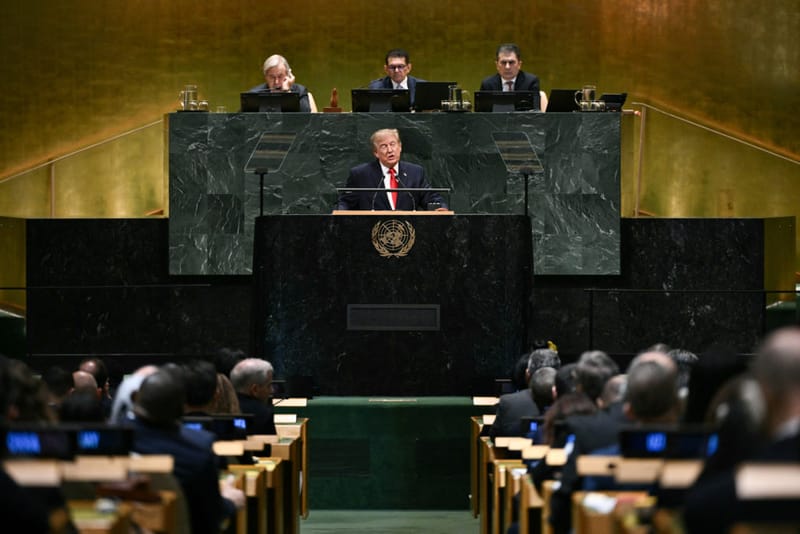
Dozens of delegates walked out of the United Nations General Assembly on Thursday, Sept. 24, as Israeli Prime Minister Benjamin Netanyahu began his address in New York.

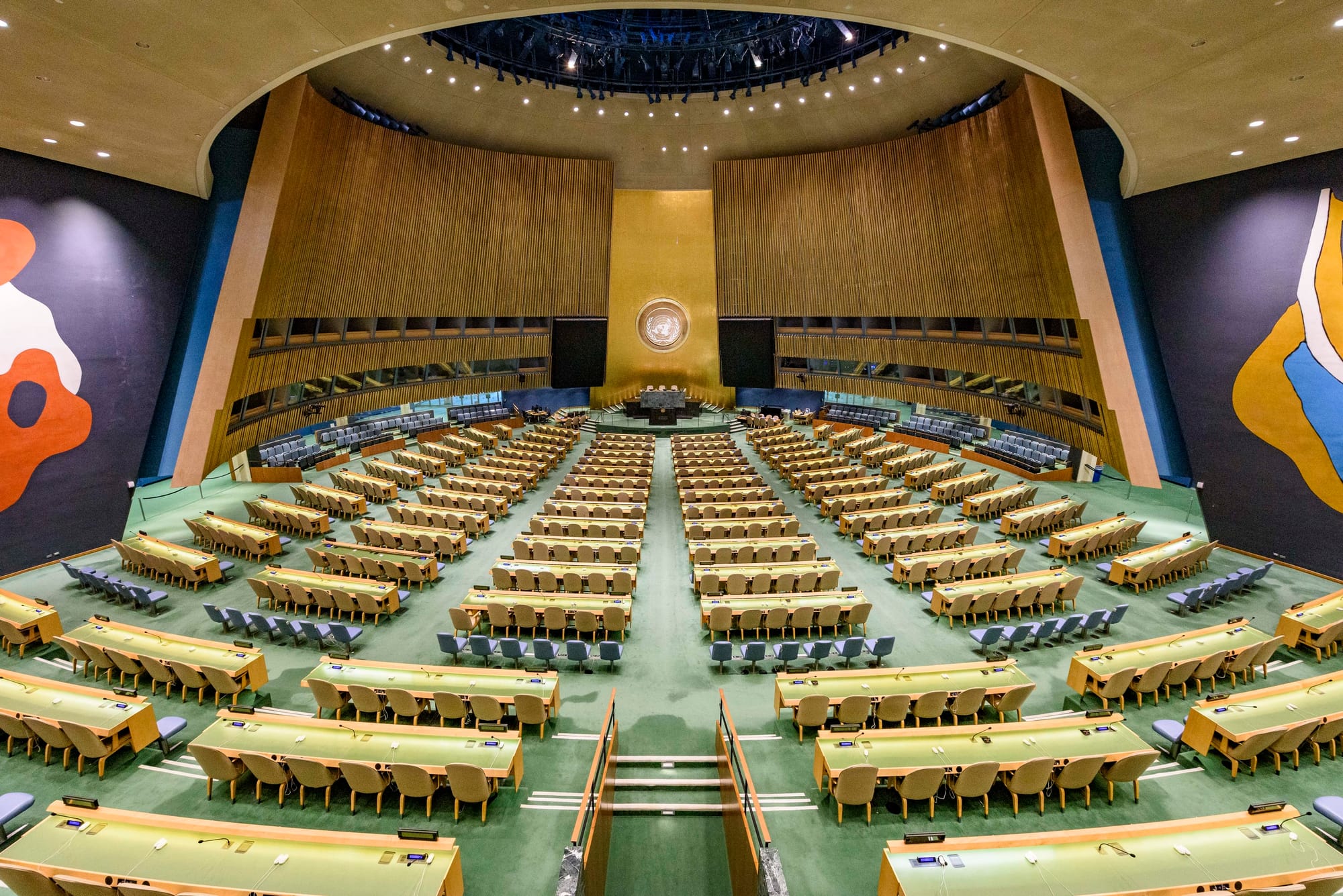
UNITED NATIONS – Dozens of delegates walked out of the United Nations General Assembly on Thursday, Sept. 24, as Israeli Prime Minister Benjamin Netanyahu began his address to the 81st session. Other delegations stayed in the chamber. There were cheers, boos and a mass exit when Mr. Netanyahu walked to the rostrum. Large sections of the hall were empty for the rest of the speech.
Mr. Netanyahu also faced a walkout at last year's session.
Source: Ground News, Sept. 26, 2026. Percentages reflect the 367 of 763 sources with a bias rating.
How Many Left
No official count has been released. Reuters reported that dozens of delegates left the hall. Turkey's state-run Anadolu Agency reviewed footage of the session and estimated that about 70 countries either walked out or did not attend. Politics Today, a Turkish outlet, estimated 77.
Anadolu identified these delegations as taking part in the protest: Turkey, Palestine, Tunisia, Syria, Algeria, Yemen, Egypt, Iraq, Saudi Arabia, Jordan, Iran, Qatar, Lebanon, Malaysia, Kuwait, Indonesia, Sudan, Spain, Brazil and Peru.
The same review corrected several earlier reports. It found that Colombia, Slovenia, Ireland, Uganda, Kenya, the United Arab Emirates, Bahrain, Germany, Argentina, Hungary, the United Kingdom, France and China all stayed represented, even though some had been reported as leaving. Al-Monitor separately reported that Bahrain, China and Colombia stayed for the address. The United States, Ukraine, Czechia, Greece, Serbia, Australia, Canada, Poland and Mexico also stayed.
Colombian Vice President José Manuel Restrepo gave his country's address just before Mr. Netanyahu, and the two were scheduled to meet during the visit. Slovenian Prime Minister Janez Janša also met with Mr. Netanyahu that day. Slovenia and Israel both described their relationship as strengthening.
An Organized Exit
The Palestinian Mission to the UN planned the walkout ahead of time. It sent a message to many of the 193 member states asking delegations to bring as many staff as possible to the hall and walk out together once the Israeli prime minister was announced.
What Netanyahu Said
Mr. Netanyahu started by addressing the delegates who had left. He called them "moral cowards" and said that by defending itself, Israel was also defending many of the countries whose delegates had walked out. He said several of those countries' leaders had privately thanked Israel for its strikes on Iran.
On Iran, Mr. Netanyahu said attacking the country was "one of the easiest decisions I've ever had to make." The United States and Israel began joint strikes on Iran in February. He said Israel acted because the threat from Iran endangered its survival, and he predicted that Iranians would eventually replace their government.
He rejected accusations of genocide in Gaza, which have come from a UN-backed inquiry, human rights groups, genocide scholars and several leaders at this year's summit. He called those accusations the "greatest lie of the century" and said Israel had acted to prevent a genocide.
He described President Trump as Israel's strongest partner. ABC News Australia reported that the two leaders have had several disagreements since the Iran strikes began.
Mr. Netanyahu named several critics directly. Each responded:
- New York City Mayor Zohran Mamdani. Mr. Mamdani had called for Mr. Netanyahu's arrest under the International Criminal Court warrant issued on Nov. 21, 2024, over alleged war crimes and crimes against humanity in Gaza. After the speech, Mr. Mamdani issued a statement disputing Mr. Netanyahu's claims about Gaza. Israeli UN Ambassador Danny Danon defended the trip as necessary.
- Turkish President Recep Tayyip Erdoğan. Mr. Netanyahu accused him of supporting Hamas, restricting journalists and seeking influence over Jerusalem. Burhanettin Duran, the Turkish presidency's communications director, called the accusations baseless.
- Qatar. Mr. Netanyahu accused Qatar of funding American universities and Al Jazeera to shape opinion against Israel and the West. Hamad Al-Muftah, Qatar's deputy ambassador to the U.S., said much of Qatar's university funding supports U.S. campuses in Doha. He said Qatar's contact with Hamas is part of its role as a mediator between Israel, Hamas, the United States and Egypt.
Abbas Spoke Hours Earlier
Palestinian President Mahmoud Abbas addressed the assembly earlier Thursday through a prerecorded video from Ramallah. The United States had denied visas to him and other top Palestinian officials for the second year in a row. The Trump administration said the Palestinian leadership was undermining prospects for peace. The Palestinian Authority called the visa denial unlawful.
Mr. Abbas called again for a two-state solution. He described a future Palestinian state that would be "non-militarized" and live alongside Israel, and he asked other countries to stop supplying Israel with weapons. The Israeli delegation's seats were empty while he spoke.
The Wider Picture
Israel's general election is about five weeks away, and Ground News reported that analysts described the address as a campaign speech. Al Jazeera reported that the speech was well received by Mr. Netanyahu's supporters in Israel. Several leaders at this year's summit criticized Israel's conduct in Gaza and the West Bank, and European governments recently sanctioned Israeli settlements. Mr. Netanyahu said those governments were giving in to public pressure.
How It Was Covered
Ground News tracked 763 sources on the story. Of the 367 with a bias rating, 37% lean left, 30% are center and 33% lean right.
The core facts were the same across outlets. What each led with differed:
- ABC News Australia and The Hill led with the exchange between Mr. Netanyahu and Mr. Mamdani.
- The Media Line focused on sorting out which delegations actually left.
- Al Jazeera framed the walkout in terms of Israel's standing abroad and its effect on politics in Israel.
- Turkish outlets reported the highest walkout estimates.
Outlets differed mainly on the size of the walkout and what it signals about international opinion.
Sources
- Ground News, "Netanyahu Calls Departing UN Delegates 'Moral Cowards' After Dozens Walk Out as He Took the Podium", accessed Sept. 26, 2026
- The Media Line, "Dozens of Delegates Walk Out as Netanyahu Addresses UN General Assembly", Sept. 25, 2026
- ABC News (Australia), "Benjamin Netanyahu attacks Israel's critics after UN delegates walk out of speech", Sept. 25, 2026
- CBC News, "Netanyahu rejects genocide allegations in Gaza after mass walkout at his UN speech", Sept. 24, 2026
- RTÉ News, "Dozens of envoys at UN walk out of Netanyahu speech", Sept. 24, 2026
- The Hill, "Netanyahu slams critics, Mamdani in defiant speech as UN delegates walk out", Sept. 24, 2026
- NPR, "Netanyahu rages against critics, including Mamdani, at the U.N. General Assembly", Sept. 25, 2026
- Associated Press via The Boston Globe, "Palestinian president, again denied a visa to speak at UN, addresses leaders on prerecorded video", Sept. 24, 2026
- CNN, "Key speeches and moments from UNGA Day 3", Sept. 24, 2026
- The Express Tribune (Anadolu Agency), "Inside the UN walkout: Who left and who stayed for Netanyahu's speech", Sept. 25, 2026
- Politics Today, "Netanyahu Addresses Nearly Empty UN General Assembly as Dozens of Delegations Walk Out in Protest", Sept. 25, 2026 (comparison only)
- Al Jazeera, "Netanyahu's UN belligerence wins cheers at home as world walks out", Sept. 25, 2026 (comparison only)